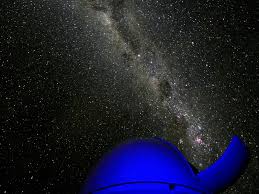

For much of human history, darkness was a natural and familiar part of daily life.
The transition from day to night marked a shift in pace, activity, and perception. The night sky was visible, not as a rarity or a spectacle, but as a constant presence.
Today, that experience has changed.
Artificial light has extended our days, illuminated our cities, and reshaped how we live and move after sunset. It has brought undeniable benefits in terms of productivity, access, and convenience.
But it has also changed something more subtle.
Our relationship with the night itself.
In many places, true darkness has become unfamiliar. The night sky is no longer visible. The natural patterns of light and dark are blurred. And in the spaces we move through, lighting is often applied broadly, without much consideration for how it is experienced.
One of the assumptions that has accompanied this shift is the idea that more light always leads to more safety.
It is an understandable belief. Light allows us to see. But the way light is used matters.
When lighting is excessive or poorly designed, it can create glare, strong contrasts, and visual confusion. These effects reduce the very clarity we are trying to achieve.
In urban environments, this can lead to spaces that feel bright, but are difficult to interpret. Areas where movement is less certain, where edges are harder to define, and where visibility becomes inconsistent.
At the same time, the increasing brightness of our night environments has broader consequences.
Light pollution disrupts ecosystems, affects human sleep patterns, and obscures the night sky entirely.
As an astronomer, I cannot separate these ideas.
The loss of the night sky is not only a scientific concern. It is a human one. It represents a disconnection from something that has shaped culture, navigation, and curiosity for thousands of years.
But there is another way to think about lighting.
One that does not frame darkness as something to eliminate, but as something to work with.
Good lighting does not compete with darkness. It complements it.
It provides illumination where it is needed, while allowing the surrounding environment to remain balanced. It reduces glare, preserves contrast, and supports the way our eyes naturally function at night.
This approach improves visibility, supports safety, and reduces unnecessary impact on the environment.
Perhaps the most important shift is not technical, but philosophical.
Instead of asking how we can make the night as bright as the day, we might ask how we can respect the qualities that make night distinct.
Because it is in that distinction that we find both clarity and connection.