

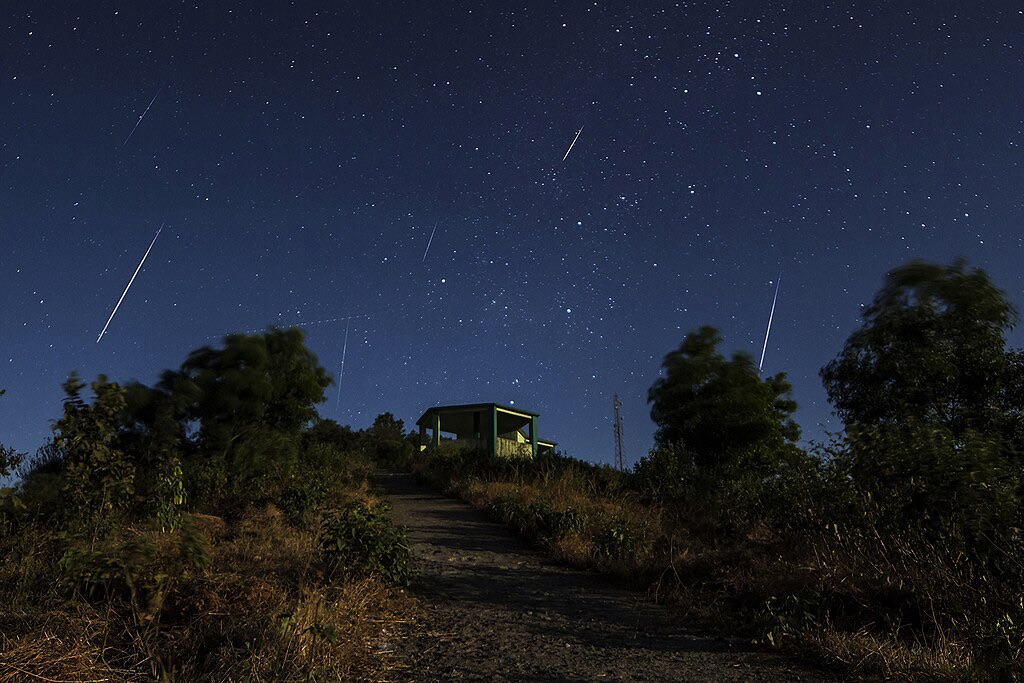
Have you ever gazed up at the night sky and spotted a fleeting streak of light racing across the darkness? That dazzling display is what we commonly refer to as a “shooting star,” but did you know that these cosmic wonders have a more scientific name? They are actually called meteors!
What Are Meteors?
When a small piece of space debris—often just a grain of sand or a pebble—enters Earth’s atmosphere at incredible speeds (up to 257,500 kilometres per hour!), it creates friction with the air. This friction generates heat, causing the object to glow brilliantly as it vaporises. The bright streak you see is the result of this intense heating, and it lasts only a few seconds! they can be natural – basically litter left behind by a passing comet or asteroid or man made from the tens of thousands of pieces of space debris.
The Meteor Shower Phenomenon
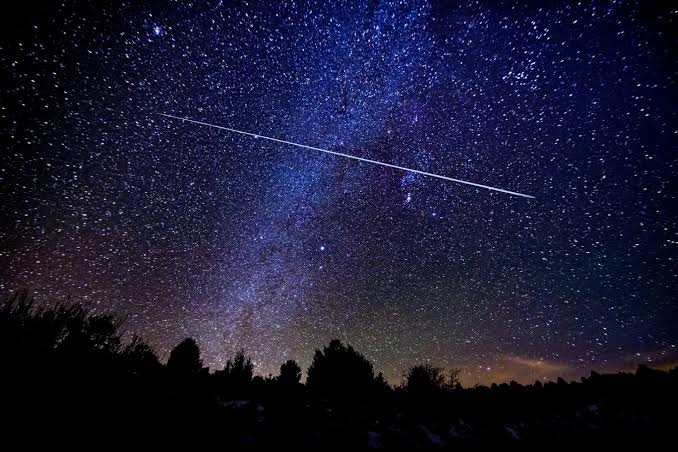
Shooting stars are often seen during meteor showers, which occur when Earth passes through the debris left behind by a comet or less commonly an asteroid. Some of the most famous meteor showers include:
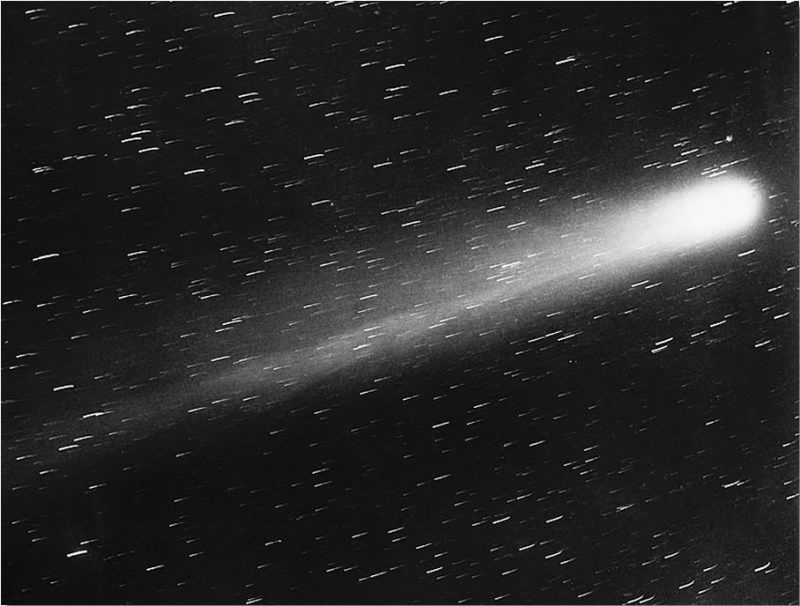
- Orionid Meteor Shower (October) Originating from the famous Halleys comet, it can produce over very fast, bright and colourful meteors traveling about 106,000 km per hour at its peak.
- Geminid Meteor Shower (December): Known for its bright and colourful meteors, it is considered one of the best showers of the year.
- Leonids (November): Associated with the Tempel-Tuttle comet, this shower can sometimes produce spectacular storms of hundreds of meteors per hour.
Interesting Facts About Shooting Stars
- Wish Upon a Star: The tradition of wishing on a shooting star dates back to ancient times when people believed these celestial events were messages from the gods.
- Not Really Stars: Despite the name, shooting stars have nothing to do with stars. They are simply meteors burning up in our atmosphere.
- Colours and Shapes: Meteors can appear in various colours depending on their composition. Sodium can produce yellow, magnesium can create green, and iron can produce a reddish hue.
Stargazing Tips
To catch a glimpse of these magnificent meteor showers, find a dark location away from city lights. Bring a blanket, lie back, and give your eyes time to adjust to the darkness. The best viewing times are usually after midnight, when the sky is darkest and the meteors are most abundant.
So next time you see a shooting star, remember that you are witnessing a tiny fragment of the universe performing a spectacular dance through our atmosphere. Happy stargazing! 🌠🌌