


In a remarkable display of engineering prowess, SpaceX’s Starship, the largest rocket ever constructed, successfully completed its sixth test flight on 19 November. Standing at an impressive 122 metres tall, Starship launched from the company’s Starbase facility in South Texas at 9am AEDT or 2200 UTC marking another significant step in the pursuit of space exploration.
This flight aimed to achieve two primary objectives: to recover the Super Heavy booster and to test the capabilities of the Starship upper stage. While SpaceX had hoped to catch the massive booster using its innovative “chopstick” system, flight conditions did not support this attempt. Instead, Super Heavy made a controlled splashdown in the Gulf of Mexico approximately seven minutes after liftoff.

Starship’s Super Heavy Flight 6 booster hovers over the Gulf of Mexico shortly before splashdown on Nov. 19, 2024. (Image credit: SpaceX)
A highlight of this mission was the inclusion of a plush banana as a zero-gravity indicator aboard Starship, marking the first payload carried on a Starship flight. The mission also saw Starship perform a pivotal engine burn, demonstrating its ability to execute the necessary maneuvers for a safe return during future orbital missions.
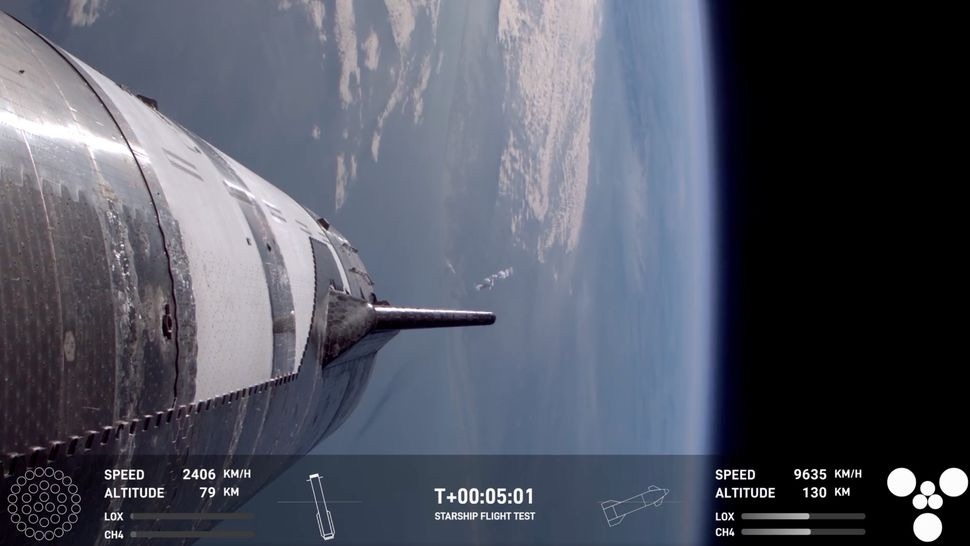
The upper stage of SpaceX’s Starship vehicle cruises above Earth during the vehicle’s sixth test flight, on Nov. 19, 2024. (Image credit: SpaceX)
Additionally, Flight 6 tested modifications to the spacecraft’s heat shield, designed to withstand the intense heat of reentry. The vehicle was subjected to increased stress during its descent, providing valuable data for future missions. SpaceX adjusted the launch timing to ensure optimal visibility of the spacecraft’s reentry and splashdown, allowing for a spectacular view of its return.

The spacecraft’s reentry was a success; it survived the extreme conditions and positioned itself vertically before gracefully landing in the Indian Ocean, off Western Australia, just as planned. The flight’s achievements have left SpaceX engineers, including Jessica Anderson and Kate Tice, in awe of the vehicle’s performance, particularly given the challenges faced during its flight.
As SpaceX looks to the future, further test flights are anticipated, with the goal of enhancing the reusability of both Starship and Super Heavy. The company’s vision includes catching Starship with the chopstick arms on future missions, which would streamline the inspection and refurbishment process, ultimately paving the way for more efficient space travel.
These are exciting times!