

Today’s astronomy post in answer to the question ‘why is
the sky blue?’

The reason the sky appears blue is because sunlight is scattered by the gases and particles in Earth’s atmosphere. Blue light is scattered more than other colours as it travels in shorter waves, explaining why we see a blue sky most of the time.
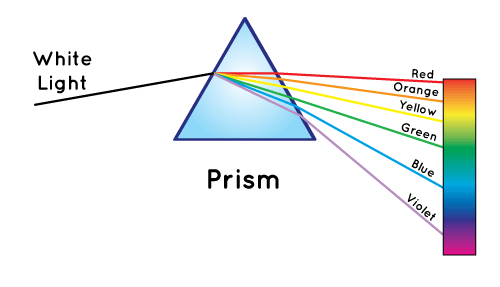
Sunlight, which appears white, is actually a mixture of all the colours of the rainbow. When white light passes through a prism, it separates into its different colours, similar to how we see a rainbow.
Just like energy moves through the ocean in waves, light energy also travels in waves. Some light moves in short, choppy waves, while other light travels in long, lazy waves. Blue light waves are shorter than red light waves.
All light travels in a straight line unless it is reflected, bent (like through a prism), or scattered (like by molecules in the atmosphere).
As sunlight enters Earth’s atmosphere, it is scattered in all directions by the gases and particles present. Blue light is scattered more by the tiny molecules in the air, which is why we see a blue sky. The light from the Sun that reaches us near the horizon has passed through more air, causing the blue light to scatter multiple times in different directions.
The blue sky we observe is a result of sunlight interacting with gas molecules in our atmosphere. Over the past 4.5 billion years, Earth’s atmosphere has changed significantly. Initially, there was no atmosphere, and the planet was extremely hot. As Earth cooled, gases like carbon dioxide and methane were released from molten rock, forming the early atmosphere.

This early atmosphere contained a high level of methane, which could create dense orange haze when interacting with sunlight. Early organisms, potentially emitting methane, may have contributed to this haze. Cyanobacteria, the first organisms to perform photosynthesis, played a key role in altering the atmosphere by releasing oxygen and affecting its interaction with light.
Today, our atmosphere is composed of 78% nitrogen, 21% oxygen, and small amounts of other gases like carbon dioxide and methane. Sunlight is a mix of all colours, with shorter wavelengths like blue appearing due to scattering off nitrogen and oxygen molecules in the atmosphere. This scattering creates the blue sky we admire each day.
Have an astronomy or science based question you would like me to answer in my weekly post? Just let me know.