

In recent days, NASA has confirmed a delay to the first crewed Artemis mission, a decision prompted not by engineering challenges but by an extended spell of unusually cold weather at the Kennedy Space Centre in Florida. This mission, known as Artemis II, marks the first time in more than fifty years that astronauts will journey around the Moon. For those of us who follow lunar exploration closely, understanding the reasons for this delay helps us appreciate the level of care and precision required for a mission of this significance.
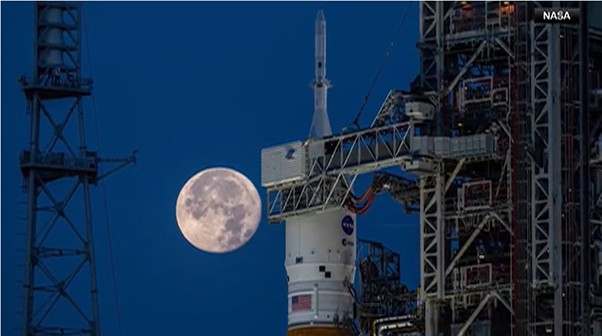
The temperatures at the launch site have been low enough to affect ground systems that support the rocket and its preparation. NASA has limits on the conditions under which the Space Launch System can be fuelled, and the forecast indicated that the average temperature would fall below the threshold needed to proceed safely. This meant that a planned fuelling exercise could not take place as scheduled and has been rescheduled for early February, depending on conditions.
This rescheduling has a ripple effect because the opportunities for a suitable lunar trajectory are quite limited. NASA sets specific days each month when the alignment between Earth and the Moon suits the mission path, and these windows cannot be easily moved. By postponing the rehearsal and associated analysis, NASA now targets no earlier than the eighth of February as the new launch date. Only two further dates remain in the February window before the mission would need to move into March.
The Orion spacecraft has remained powered and heated during the cold spell to ensure its internal environment stays within operational limits. Engineers have also adjusted the various protective systems that prevent moisture from entering the rocket’s aft section. These steps are part of the routine care required for cryogenic hardware that must withstand the gentle but persistent pressure of extremely cold propellant once fuelling begins.
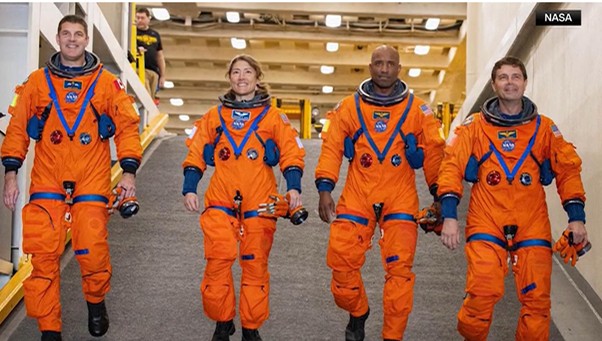
The four-person crew is still in pre-launch quarantine in Houston. Their journey to Florida is traditionally timed so that the astronauts arrive close to the final countdown, but with changing dates, NASA has not yet confirmed when they will travel to the Kennedy Space Centre. This remains a standard part of preparation for any deep-space mission and helps ensure that the astronauts remain in good health before launch.
Another aspect of this delay is the careful coordination required with other missions. NASA is also preparing to send a new crew to the International Space Station. The timing of that launch depends on the Artemis schedule because the two missions cannot overlap in a way that requires full support from the same teams simultaneously. If Artemis lifts off on the eighth of February, the station crew would wait until after the lunar crew safely returns. If the launch moves into March, the station launch may proceed earlier.
While these adjustments may seem small, they reinforce an important truth about human spaceflight. Launching a crew into deep space requires exceptional attention to detail. Weather remains one of the most influential factors in the final stages of preparation. Engineers must have confidence that every procedure involving cryogenic fuel and every system that supports the rocket is performing as expected. Safety is always the guiding principle, and measured decisions now help ensure a successful mission when the time is right.
Artemis II will follow a ten-day mission profile that loops around the Moon and returns to Earth. It will test Orion’s life support systems under real conditions and allow astronauts to practise manual and automated operations in deep space. The mission will pave the way for future efforts to land astronauts near the lunar south pole and eventually establish a sustained presence on and around the Moon.
As we wait for the updated launch date, it is worth remembering that weather-related delays are a normal and well-accepted part of spaceflight operations. A careful, steady approach ensures that Artemis II begins its journey under the best possible conditions, setting the stage for a new era of human exploration beyond Earth orbit.