

As an astronomer, I often find myself gazing at the stars, contemplating the cosmos and its impact on our earthly lives. One intriguing aspect of our planet is how we mark the changing of the seasons. In Australia, we embrace the start of each season on the 1st of the month. This begs the question: why do we choose calendar months over solstices or equinoxes when it comes to demarcating seasons?
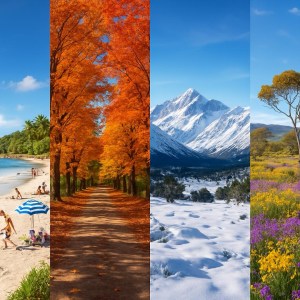
The answer intertwines with cultural, agricultural, and meteorological practices. For many Australians, seasons are not just dictated by celestial events; they are about living in harmony with the land. Farmers rely on seasonal calendars to plan crops, and having defined months simplifies communication about the expected weather. Quite sensibly, the start of summer in December coincides with the peak of our heat, while the first day of winter hits in June, reminding us that winter is not a theoretical idea; it’s an experience.
Interestingly, Australia is not alone in this approach. Countries like New Zealand, South Africa, Argentina, Chile, and parts of Brazil also define their seasons based on the calendar months. This method reflects local climate patterns and agricultural needs, leading to a practical alignment that resonates with the everyday experiences of their populations.
However, this approach can feel somewhat controversial among purists who advocate for astronomical precision. Critics argue that aligning seasons with the tilt of the Earth and solar patterns provides a natural rhythm that calendar months disrupt.
The key differences between how Australia and countries with distinct seasonal changes mark the seasons primarily revolve around the criteria used to define them, along with cultural and practical considerations. In Australia, the seasonal markers are often calendar-based, emphasising predictable dates that align with local weather patterns, while countries such as those in Europe and North America rely on astronomical events, marking summer with the summer solstice and winter with the winter solstice.
This calendar method in Australia simplifies agricultural planning and social communication, allowing farmers to anticipate changes based on seasonal markers like December 1 for summer. In contrast, the alignment with solstices and equinoxes in countries with distinct seasons often reflects significant cultural traditions, where the changing seasons correlate with environmental transformations like blooming flowers in spring and leaf fall in autumn.
So, here’s my challenge to you: should we cling to our calendars and the simplicity they offer, or should we embrace the cosmic markers that remind us of our place in the universe? Let’s hear your thoughts on how we balance practicality with astronomical accuracy in our seasonal understanding.
Yes, we should devote more faith in our Australian Indigenous forefathers who have been in this country for 60,000 years and have nurtured the land… allowing us to crop and graze and live a sustainable life in our living present and future.
Donna I have always thought that marking the start of summer in the middle of December at the solstice is silly. We are already having hot weather. Just my opinion the winter, I generally mark the season start looking at what is in flower and what the birds are doing.