

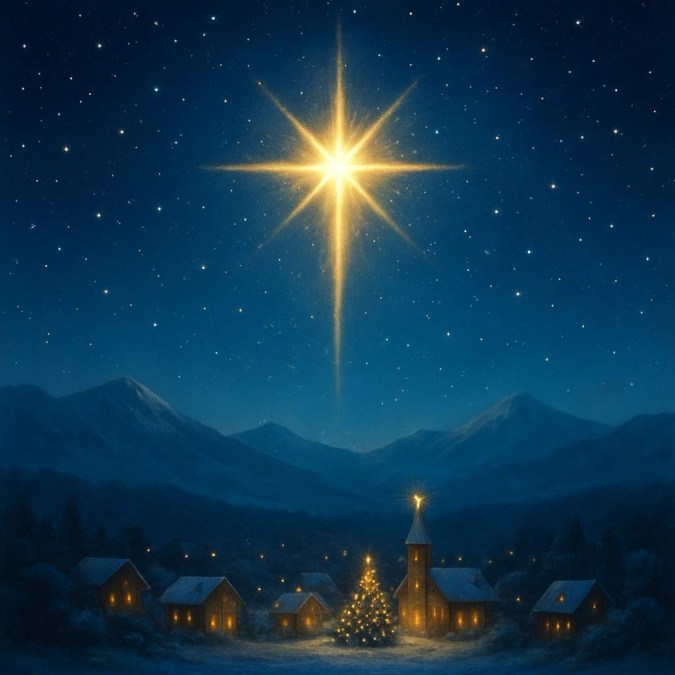
As we approach the festive season, the cosmos takes on a special significance, giving rise to fascinating discussions about celestial phenomena. One of the most intriguing topics is the historical and scientific significance behind the Christmas star. Many wonder if it was a literal star that guided the Magi to Bethlehem or something more complex.
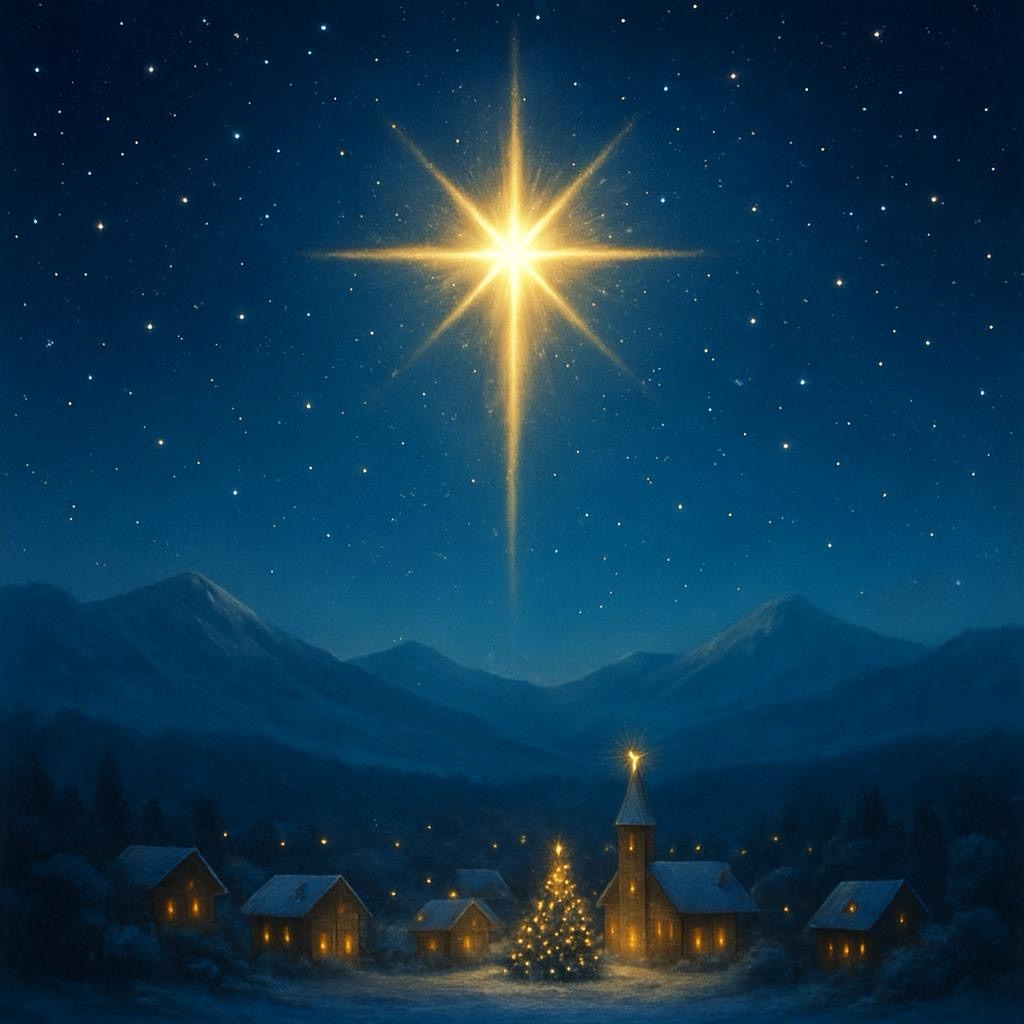
Astronomers have proposed several theories regarding what the Christmas star might have been. One widely accepted theory is that it was a conjunction of planets. A notable conjunction of Jupiter and Saturn occurred in 7 BCE, creating a bright light in the sky that could have been interpreted as a significant celestial event.
Some suggest that the Christmas star could have been a supernova—an exploding star that becomes incredibly bright for a period of time. Historical records indicate there may have been a supernova visible around the time of Jesus’ birth.
Another possibility is that the Christmas star was a comet. Halley’s Comet, which was recorded around 12 BCE, could have been interpreted as extraordinary by ancient observers.
Ancient Chinese astronomers documented celestial events, including the appearance of new stars and comets. Some of these records, dating to the time of Jesus’ birth, suggest significant astronomical phenomena that could correspond to the Christmas star.
Similar to supernovae, a nova is a star that suddenly increases in brightness. Researchers have proposed that a nova might have been the star observed by the Magi. Beyond scientific theories, some scholars suggest that the Christmas star may be more symbolic than literal. This interpretation focuses on its role in the nativity story as a representation of hope and guidance rather than a specific astronomical event.
Now, looking toward the night sky this December, you might notice some interesting celestial events. December 2025 presents the visibility of various planets, particularly Jupiter and Saturn, but without the classic close alignment often highlighted in celestial narratives. Astronomers define a planetary alignment as a configuration where multiple planets appear closely grouped in the same region of the sky, typically along the ecliptic plane. This means the planets are situated within a narrow angular range and can be observed together in a single viewing.
However, this December offers notable pairings and groupings of planets at different times and positions in the sky. While Jupiter and Saturn will be prominent during the month, they will not be aligned in the typical fashion observed during significant alignments in the past. Indeed, December 2025 is characterized as different, with observers able to appreciate the bright glow of Jupiter and Saturn without witnessing the tight linear correlation that a true alignment would present.
As you gaze at the stars this holiday season, consider this: What do you think the Christmas star truly represents? Is it a fascinating historical event, or does it merely serve as a beautiful backdrop to our earthly celebrations? How do you blend science with tradition during the festive period? Share your thoughts, and embrace the magic of the cosmos this Christmas.