

In a thrilling revelation for space enthusiasts and researchers alike, NASA’s Perseverance rover has recorded what appears to be the sound of lightning on Mars, adding a captivating layer to our understanding of the Martian atmosphere. Published in Nature, the study invites us to consider a different perspective on a phenomenon we typically associate with dramatic displays and the rumble of thunder.
On our home planet, lightning manifests in spectacular flashes and booming echoes, while the Martian version is decidedly more subdued. Imagine a gentle zap, akin to the static electricity we experience after shuffling across a carpet in socks. The lightning recorded by Perseverance is primarily attributed to charged dust particles swirling about in the Martian atmosphere. Remarkably, dust devils—short-lived whirlwinds that also occur on Earth—play a crucial role, lifting and charging particles as they spin, much like rubbing a balloon on hair.
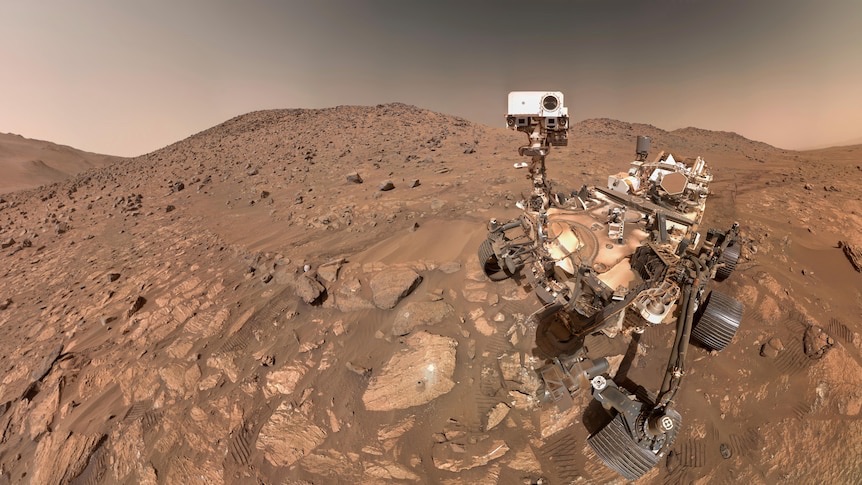
Since landing in the Jezero Crater in 2021, the Perseverance rover has been diligently exploring its surroundings. During one encounter with a dust devil, the rover’s instruments captured audio data indicating electrical activity. The study’s team analysed this data and discovered peaks in the audio that could suggest electromagnetic discharges, suspected Martian lightning. In total, they catalogued 54 such peaks after sifting through 28 hours of recordings over four years.
However, the debate about the existence of lightning on Mars continues. The evidence is persuasive but lacking in visual confirmation. Unlike gas giants like Jupiter and Saturn, where lightning has been confirmed, the thin Martian atmosphere complicates direct observations. Daniel Mitchard, a lightning physicist at Cardiff University, described the discharges as weak, millimetre-long sparks, akin to the sensation felt when touching a metallic doorknob after walking on a carpet.
Historically, scientists have speculated about lightning on Mars but have struggled to find definitive evidence. Hints came from observations of microwave emissions during a dust storm in 2006; however, subsequent analyses failed to correlate this with further data. The challenges of distinguishing lightning from other atmospheric phenomena from orbit have made direct observation elusive.
While findings from Perseverance present “unprecedented observations,” the absence of visual confirmation leaves room for skepticism. Photos could show a clear image, but the nature of these small discharges means they could be brief and faint, contributing to the uncertainty surrounding their existence.
As we ponder these revelations, one cannot help but wonder: Could the next wave of exploration finally bridge the gap between sound and sight, conclusively proving that Mars has its own version of lightning?