

There’s been a bit of noise in the media this week about a “major discovery” from NASA involving comet 3I/ATLAS. Some headlines suggest it’s the breakthrough that could reveal the secrets of life across the Galaxy.
Now, I love a good comet story as much as anyone, but as is often the case, the truth is far more interesting when we peel back the hype.
Comet 3I/ATLAS isn’t your average visitor. It’s interstellar, meaning it came from beyond our Solar System and is just passing through before heading back into the void. That alone makes it fascinating. It’s thought to be around seven billion years old, which makes Earth the young one in this encounter.
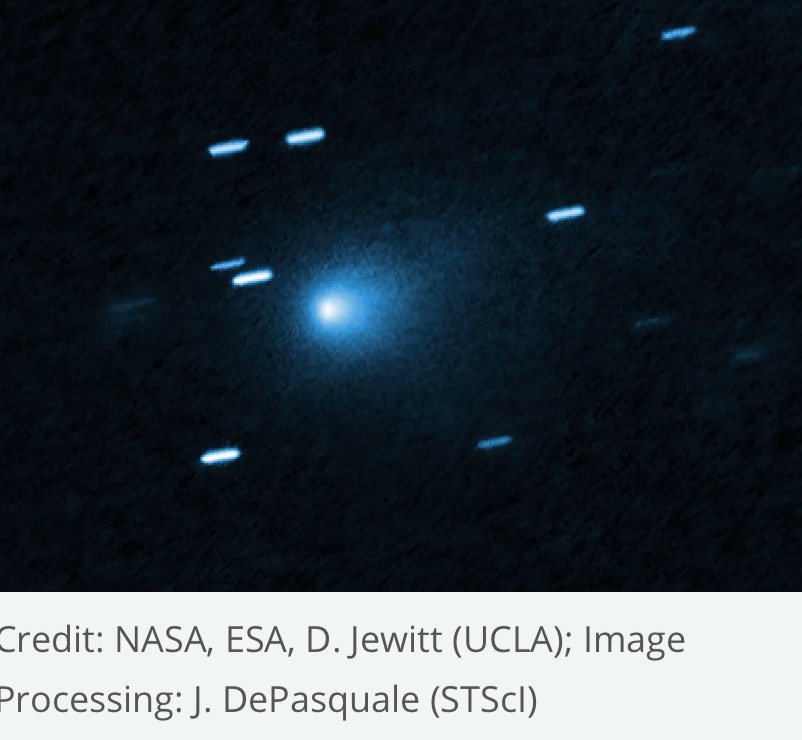
Recently, a team from Auburn University in the US used NASA’s Neil Gehrels Swift Observatory to spot something remarkable. They detected a faint ultraviolet glow – the fingerprint of hydroxyl gas (OH) – which is a tell-tale sign of water.
Now, that’s interesting enough, but here’s the twist. Swift saw this activity when the comet was three times farther from the Sun than Earth, well beyond the range where water ice usually turns to vapour. At that distance, most comets in our Solar System are having a nap, not losing 40 kilograms of water every second.
So, what’s going on? The best guess is that tiny icy grains are escaping from the comet’s surface and gently heating in sunlight, releasing gas as they go.
This is where the science gets exciting. By detecting water in an interstellar comet, astronomers can now compare it to the comets we know, giving us a glimpse into the chemistry of other star systems. As Professor Dennis Bodewits put it, “When we detect water – or even its faint ultraviolet echo – from an interstellar comet, we’re reading a note from another planetary system.”
It’s a beautiful thought, isn’t it? A cosmic postcard from a distant sun, quietly reminding us that the ingredients for life might not be unique to our corner of the Galaxy.
But here’s where I think we should be cautious. The media loves to jump to “life in the universe!” stories, but this discovery isn’t proof of anything like that. It’s another data point – a fascinating one – that helps us refine our understanding of how planets and comets form.
3I/ATLAS will fade from view for a while as it slips behind the Sun, but it’ll return to our skies after mid-November 2025, giving us another chance to see what it’s up to.
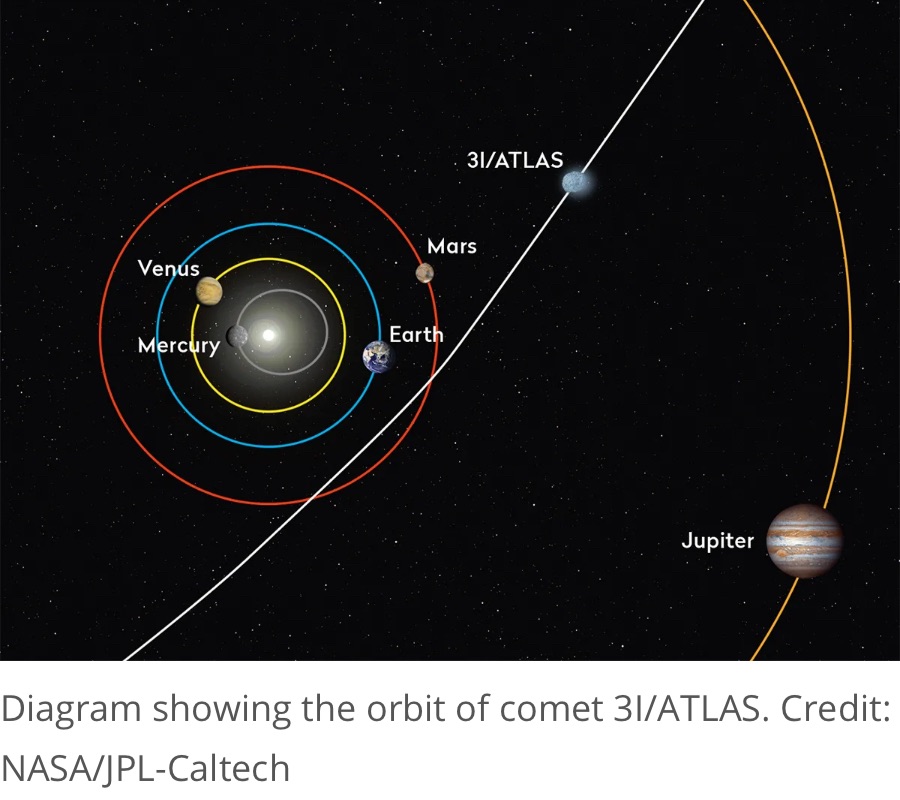
Every interstellar visitor tells a different story. ‘Oumuamua was dry, Borisov was rich in carbon monoxide, and now ATLAS is shedding water where we didn’t expect it. Each one quietly rewrites our cosmic textbook.
So, while some may chase the headline of “alien water”, I’ll happily chase the data. It’s less dramatic, but much more rewarding.
Question for you:
Do we risk losing public trust in science when discoveries like this are exaggerated for clicks, or do the sensational headlines help spark curiosity that leads people to dig deeper?