

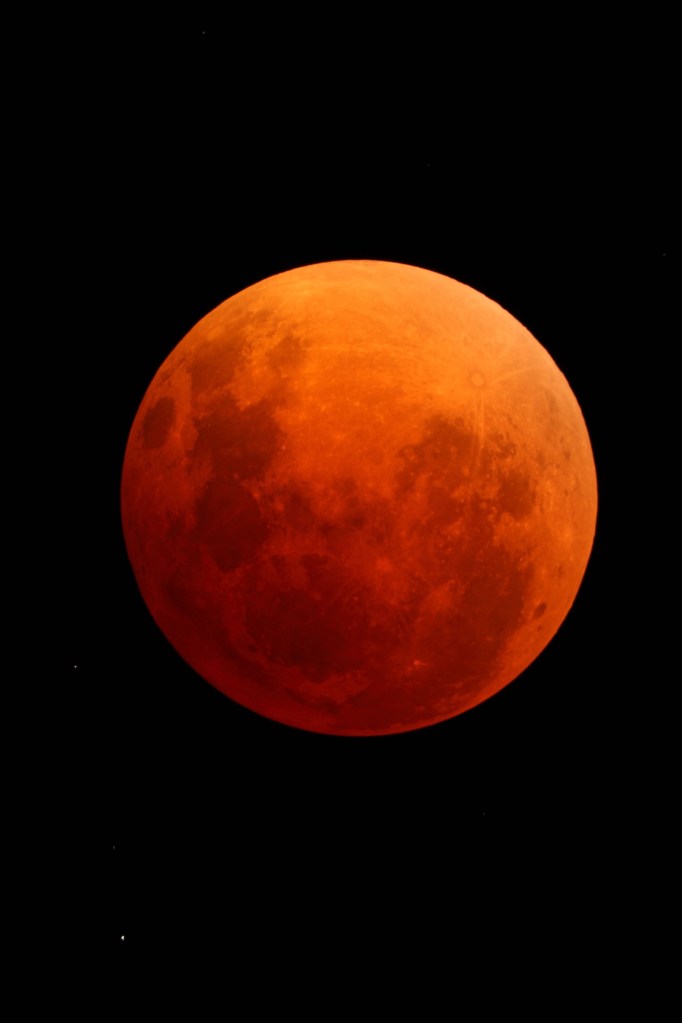
As the world turns its gaze skyward, an extraordinary celestial event is set to grace our skies: a Blood Moon. This stunning phenomenon, where the Moon takes on a dramatic red hue during a total lunar eclipse, will be visible across Eastern Australia on the nights of September 7 and 8, 2025.
Let me guide you through this captivating occurrence and provide tips for optimal viewing.
What is a Blood Moon?
A Blood Moon occurs during a total lunar eclipse when the Earth passes directly between the Sun and the Moon. During this alignment, the Earth’s atmosphere scatters sunlight, allowing only the longer, reddish wavelengths to reach the lunar surface, giving it that captivating crimson glow. Blood Moons are relatively rare events, and while total eclipses occur approximately once every 2.5 years, the moments when they align with ideal viewing conditions can be few and far between.
Visibility in Eastern Australia
The Blood Moon will be positioned favourable for observation across Eastern Australia, making this a prime opportunity for enthusiasts and curious observers alike to appreciate our celestial neighbour in its full glory.
Timing in AEST:
– Start of Penumbral Eclipse: September 7, 2025, at 10:14 PM AEST
– Start of Partial Eclipse: September 7, 2025, at 11:32 PM AEST
– Start of Total Eclipse (Blood Moon Phase): September 8, 2025, at 12:36 AM AEST
– Maximum Eclipsed Moon: September 8, 2025, at 12:57 AM AEST
– End of Total Eclipse: September 8, 2025, at 1:53 AM AEST
– End of Partial Eclipse: September 8, 2025, at 3:00 AM AEST
– End of Penumbral Eclipse: September 8, 2025, at 4:19 AM AEST
Ensure you mark these times on your calendar.
Tips for Viewing the Blood Moon
1. Find a Dark Location: Light pollution can significantly impact your viewing experience. Look for an open space away from the city lights, such as parks or rural areas, to enjoy the Moon in all its glory. Although even city dwellers will still be able to witness this event as the Moon will look quite orange!
2. Plan for the Weather: Check the forecast in advance. Clear skies are ideal for viewing, so be prepared for any weather changes and have alternative arrangements if needed.
3. Bring the Right Equipment: While the Blood Moon can be viewed with the naked eye, binoculars or a telescope will enhance your experience and allow you to observe more details.
4. Gather Your Friends or Family: Make this a family or community event by sharing it with others.
5. Capture the Moment: If you plan to take images, I suggest bringing a camera with manual settings or a smartphone with a camera. A tripod is essential to stabilise your shots, enhancing your photography.
Imaging the Blood Moon
To effectively capture the Blood Moon, consider these simple tips:
– Use a Long Exposure: Increase your exposure time to capture the richness of the Moon’s colour and details.
– Adjust Your Settings: Lower your ISO to reduce noise and use a wide aperture to let in more light.
– Focus Manually: Autofocus may struggle in low light. Use manual focus to ensure sharp images of the Moon’s surface.
– Experiment with Composition: Include suitable foreground elements like trees or buildings to add depth to your photographs.
This Blood Moon offers an extraordinary opportunity not only to witness a unique astronomical event but also to reflect on the beauty and mystery of our universe. As we look up to the night sky, let us remember that each phenomenon brings us closer to the stars and the stories they hold.
Embrace the wonder of the Blood Moon on September 7/8, 2025, and enjoy the journey of exploration and discovery it brings. Happy Moongazing!