


In the chilly winter of 1967, something incredible was happening deep in the English countryside. Picture this: a 24-year-old woman named Jocelyn Bell is surrounded by cables and machines that hum and buzz. She is a doctoral student at Cambridge University, and for months, she has been working hard to help build a massive homemade radio telescope. Her job? To search through tons of data for distant quasars—super-bright objects in space.

But instead of quasars, Jocelyn discovered something far more exciting!
While sifting through the radio data, she noticed a faint signal that was unlike anything she had seen before. It pulsed every 1.337 seconds—so steady and regular that it felt like it must be artificial. Jocelyn and her team jokingly called it LGM-1, which stood for “Little Green Men,” because they thought it might be a message from aliens. But Jocelyn was more interested in the science than in space creatures.
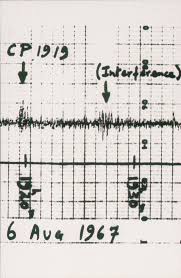
With determination, she rolled up her sleeves and got to work. She checked and rechecked the data, ruling out any interference. After much hard work, Jocelyn made an incredible discovery: she found a neutron star—an extremely dense star that spins rapidly and sends out beams of radio waves, just like a lighthouse guiding ships at sea. This was the first pulsar ever discovered!
But here’s where the story takes a twist. When the Nobel Prize in Physics was awarded in 1974, Jocelyn’s name was missing. The prize went to her male supervisor, Antony Hewish, and another scientist, Martin Ryle. Jocelyn decided to stay quiet about it, later saying, “It would demean Nobel Prizes if they were awarded to research students.” She showed remarkable grace, even though she had done so much to help with the discovery.
Despite this setback, Jocelyn’s journey didn’t stop there. She became a guiding light in the world of science, teaching and mentoring others. In 2018, she received a prestigious award called the Breakthrough Prize in Physics, worth an astonishing $3 million! Instead of keeping the money for herself, she donated it all to help women, minorities, and refugees enter the field of physics. How inspiring is that?
I was so privileged to meet Dame Jocelyn Bell Burnell at the Parkes Radio Telescope in 2018 during the CWAS Astrofest, where I was honoured to be a guest speaker as well. It was an unforgettable experience to be in the presence of such a groundbreaking scientist who has inspired so many.

Jocelyn once said, “You can be good, or you can be lucky. I was both.” But we know she was also incredibly persistent, brilliant, and brave enough to listen to the universe’s whispers.
Jocelyn Bell Burnell’s story is a reminder of how important it is to follow your passion, no matter the obstacles. She is a true pioneer in astrophysics and an inspiration for young scientists everywhere. So, the next time you look up at the stars, remember Jocelyn’s journey and let it inspire you to reach for your own dreams!
That is truly incredible and inspiring! Dame Jocelyn must be a wonderful woman, smart, brilliant, strong and ahead of her time. One of those ground breakers, often lost, but that have opened doors for the women of today. We must remember we stand on the shoulders of giants. Thank you for sharing her story.