

The cosmos is buzzing with activity this March, and one of its most harmonious moments is nearly upon us—the March equinox. This cosmic event occurs at precisely 2:29 pm AEDT (1:29 pm AEST) on Thursday, March 20, 2025. That’s 3:29 am UTC for the stargazers beyond our Aussie borders. Let’s dive into what makes the March equinox a truly awe-inspiring event.
What is the March Equinox?
The March equinox, also known as the vernal equinox in the Northern Hemisphere, marks the moment the Sun crosses Earth’s equator, moving from the southern to the northern hemisphere. On this day, the Sun shines directly above the Equator, giving us nearly equal amounts of daylight and darkness across the planet.
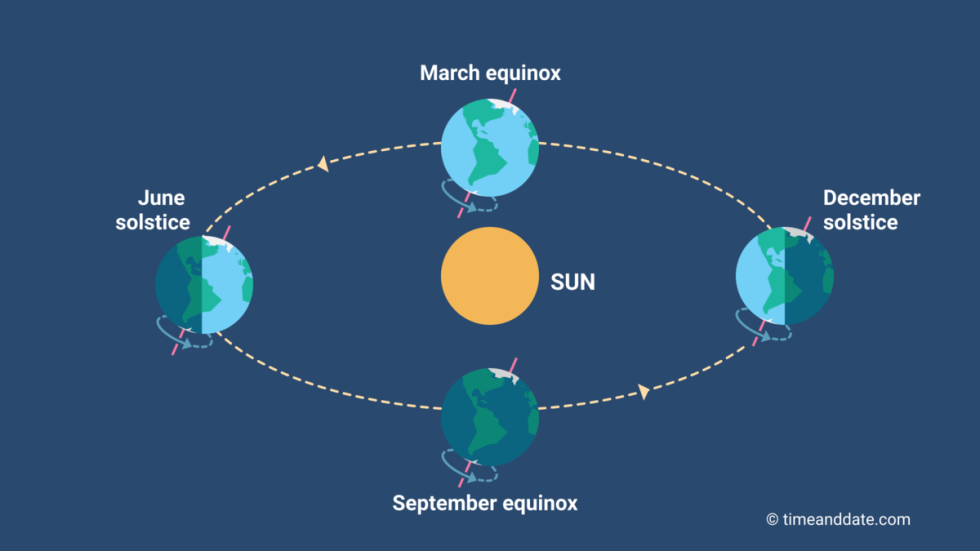
This moment signals the start of astronomical spring in the Northern Hemisphere, a time of blossoming life and warming days. Meanwhile, here in the Southern Hemisphere, it heralds the arrival of astronomical autumn, when cooler breezes stir, and leaves start their colourful descent.
The Truth About Seasons
One common misconception about seasons is that Earth’s distance from the Sun causes them. It might sound logical, but it’s not true! Seasons occur because Earth’s axis is tilted at an angle of 23.4 degrees. This tilt means different parts of our planet receive varying amounts of sunlight throughout the year.
Surprisingly, Earth is closest to the Sun (a point called perihelion) in early January, during the Northern Hemisphere’s winter. Conversely, Earth is farthest from the Sun (at aphelion) in early July, the height of their summer. So, the angle of sunlight hitting the Earth, not the distance, causes the seasons we know and love.

Equinox vs. Solstice: What’s the Difference?
Equinoxes and solstices are pivotal points in our planet’s annual journey around the Sun:
- Equinoxes (March and September): The Sun sits directly above the Equator, giving us nearly equal day and night.
- Solstices (June and December): The Sun reaches its most extreme positions north or south of the Equator, marking the longest and shortest days of the year.
Seasons Down Under: The Meteorological Twist
In Australia and New Zealand, we often follow the meteorological definition of seasons instead of the astronomical one. This means our seasons align with calendar months:
- Spring: September 1 – November 30
- Summer: December 1 – February 28/29
- Autumn: March 1 – May 31
- Winter: June 1 – August 31
Contrastingly, the astronomical definition uses equinoxes and solstices to determine seasonal boundaries.
A Moment of Cosmic Balance
The equinox is a time of balance when the forces of light and dark are nearly equal across Earth. It’s a powerful reminder of the natural harmony governing our planet and the universe.
So, as the March equinox approaches, please take a moment to appreciate the changes in the air, the shifting skies, and the cosmic choreography that connects us all. Whether you’re welcoming spring or autumn, this celestial event is a testament to the rhythmic beauty of our world.