

In a stunning development, NASA’s Voyager 1 spacecraft has reactivated a backup radio transmitter that has been inactive since 1981. This unexpected revival comes after the spacecraft encountered a brief communication issue, prompting it to enter a protective mode to conserve power.
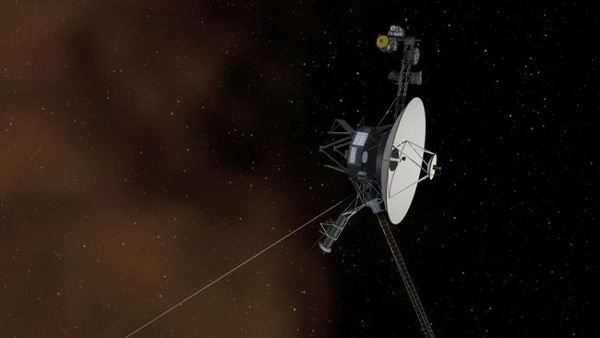
The situation unfolded on 16 October when a command from NASA’s Deep Space Network instructed Voyager 1 to turn on one of its heaters. However, by 18 October, the flight team noticed that the spacecraft had not responded to this command. Upon further investigation, they discovered that Voyager 1 had automatically switched off its primary X-band radio transmitter and activated its secondary S-band transmitter, which uses less power.
This switch appears to be a precautionary measure by Voyager’s fault protection system, designed to respond to onboard anomalies. NASA officials are now working to gather data and understand the situation, aiming to restore Voyager 1 to its normal operational state.

For many, including myself, the Voyager missions are a source of inspiration and fascination.

The Pale Blue Dot image showing Earth from 6 billion kilometres appearing as a tiny dot (the bluish-white speck approximately halfway down the light band to the right) within the darkness of deep space.
Launched in 1977, these spacecraft have been exploring the cosmos for over four decades, and Voyager 1 now continues its journey through interstellar space, reminding us of the enduring legacy of human curiosity and exploration.