

Prepare for an early morning treat this week as Comet C/2023 A3 (Tsuchinshan–ATLAS) graces the pre-dawn sky across Australia.

What’s in a Name?
Comet C/2023 A3 has been making headlines, and its intriguing name reflects its discovery journey. First spotted by the Purple Mountain Observatory and confirmed by ATLAS in South Africa, this comet comes from the Oort Cloud, a distant region filled with icy bodies extending far beyond our solar system.
When and Where to Look
Set your alarm for around 4:30 am local time this Sunday. Look toward the low eastern sky, where the comet will be about three finger widths above the horizon. It is easy to see naked eye in the morning twilight but is even more spectacular in binoculars!
As dawn approaches, watch as it fades into the morning glow and transitions into the evening sky during October when it be brighter and easier to see weather permitting.
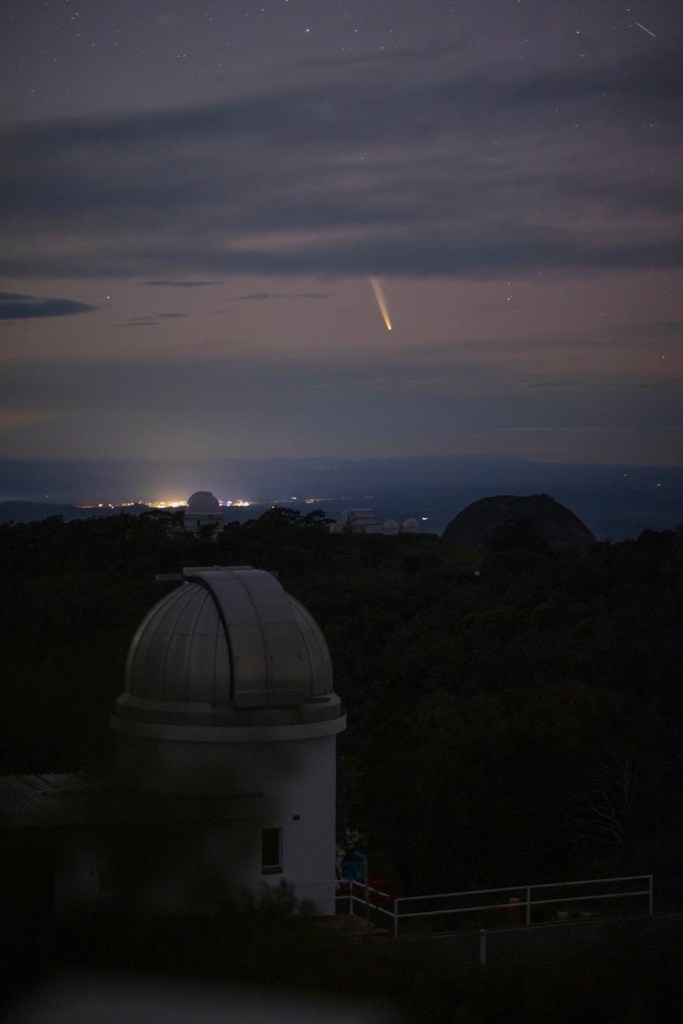
Making the Most of Your Viewing
To track Comet C/2023 A3, use apps like Stellarium or TheSky Live for precise location guidance. Other good options include Night Sky and Starwalk. Be sure to download necessary data while you have a strong internet connection, and set your app to night mode to preserve your night vision.
Observers have recently spotted the comet with the naked eye under ideal conditions, so find a dark spot away from light pollution. An eastern beach view could provide a stunning backdrop!
Binoculars will enhance your experience, making it easier to spot this cosmic visitor. If you miss it, the comet will return and be closest to us on Oct 12.
Capture the moment! Snap a photo with your mobile or camera and share your results with us.
Happy comet watching!
4:30am on Sunday to see the comet.
Is that 4:30 after we have moved our clocks one hour forward for daylight saving?
Forgot about daylight saving! So will be an hour later by clock