

As we start to enjoy the slightly longer and warmer spring nights, we have the opportunity to view an annual spectacle that captures the imagination.
This week heralds the arrival of the Orionids, a meteor shower born from the dust trail of the universe’s most iconic snowball—Halley’s Comet.
## Mark Your Calendars: Orionids Are Here!
The Orionids shower officially begins on September 26 and stretches through to November 22, 2024.
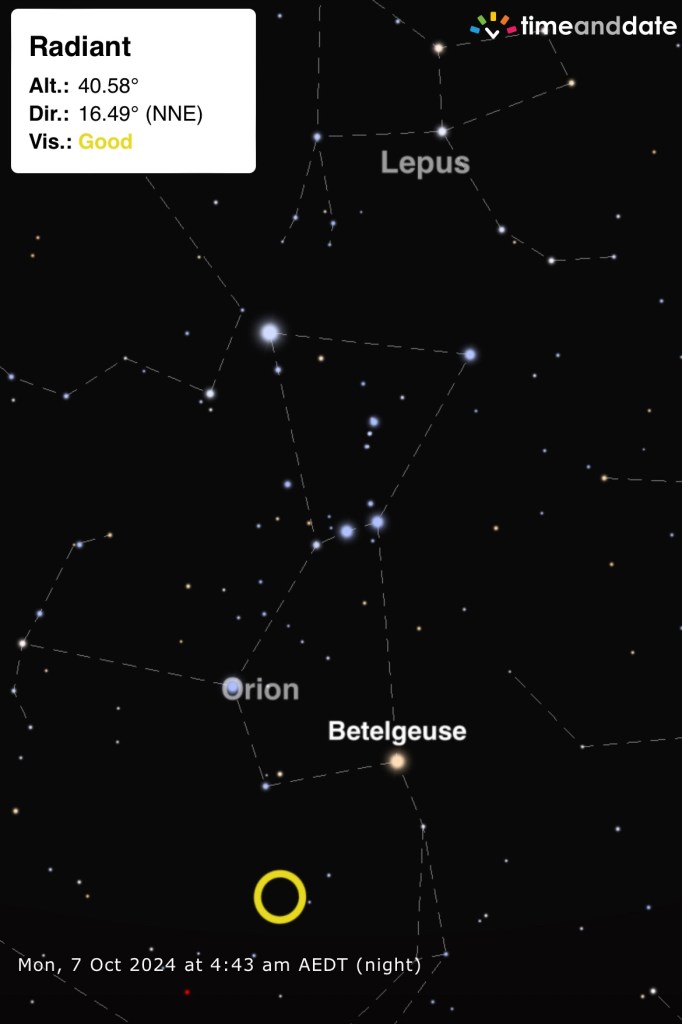
Finding the radiant of meteor shower on October 6/7 at 4:43 am AEDT without any Moon to get in the way! From timeanddate.com
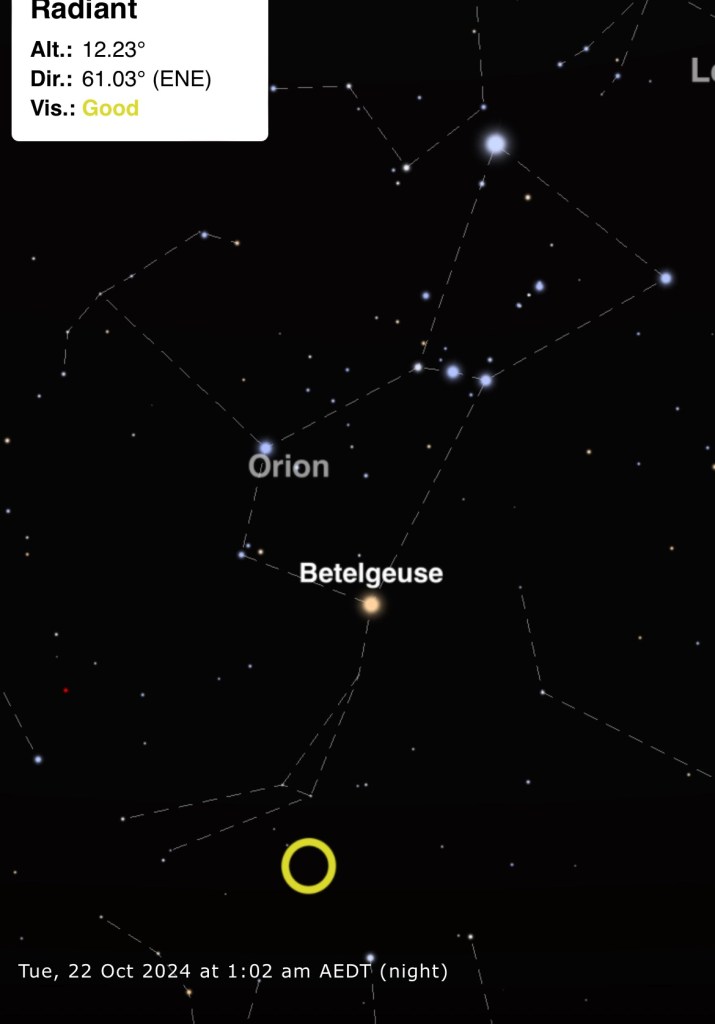
However, the peak of this event occurs overnight from October 21 to October 22 for us in the Southern hemisphere. While you can catch glimpses of these meteors on any clear night during this period, the magic of the peak night is not to be missed.
## What to Expect: The Nature of a Meteor Shower
The Orionids are classified as a medium-strength meteor shower. This means that you can expect to see around 20 meteors (shooting stars) per hour at peak times. Yet, on particularly good nights, this number can rise to 50 or even 75 meteors!
### Moonlight and Meteor Watching
This year, the peak night will feature a waning gibbous moon, which will rise before midnight and linger in the sky throughout the night. This can unfortunately overshadow the visibility of the meteor shower, so it would be a good idea to start your viewing as soon as darkness falls. For optimal viewing, consider using a moonrise and moonset calculator to plan your session. Most weather apps include sunrise/sunset and moonrise/moonset times.
## The Legacy of Halley’s Comet
So, how does Halley’s Comet influence the Orionids? Meteors, those fleeting streaks of light we often refer to as “shooting stars,” are tiny fragments of rock and dust that ignite as they enter Earth’s atmosphere at a staggering speed of approximately 66km per second.

Close-up image of Halley’s Comet, the culprit behind the Orionid meteor shower. (Image credit: NASA Jet Propulsion Laboratory, California Institute of Technology)
The Orionids are specifically linked to the debris left behind by Comet Halley (1P/Halley), which last graced our inner solar system in 1986 and is expected to return in 2061. Currently, Halley’s Comet resides in the constellation Hydra. While named after the constellation of Orion, where their radiant point lies, these meteors can appear anywhere across the night sky.
Halley’s Comet is the source of not just the Orionids but also the Eta Aquarids, which light up our skies each May.
## Tips for Meteor Watching: How to See the Orionids
If you’re eager to witness this meteor display, here are some tips to enhance your experience:
1. Escape Light Pollution: Venture far from urban areas. Ideally, find a Dark Sky Park or Designated Dark Sky Reserve for optimal conditions. Otherwise somewhere away from city lights.
2. Choose a Clear Viewing Spot: Look for a location with an unobstructed view of the sky.
3. Dress for Comfort: Bring warm clothing—nights can get chilly!
4. Be Patient: Settle down and watch for at least 30 minutes, preferably reclining on a chair or ground pad.
5. Leave Binoculars Behind: Avoid telescopes or binoculars as they limit your field of vision.
6. Protect Your Night Vision: Steer clear of your mobile devices or any other bright lights. If you need light, use red light to preserve your night vision.
## Conclusion: Embrace the Wonder
As we prepare for the Orionids, let’s embrace the wonder of the universe. Whether you’re an avid stargazer or a curious newcomer, this annual meteor shower offers a brilliant opportunity to connect with the cosmos. Mark your calendars, find a dark sky, and let the magic of the Orionids unfold before your eyes. Happy meteor watching!