

The Sun has once again shown its incredible power by releasing two powerful X-class solar flares in less than two hours yesterday. These flares are the strongest class of solar flares and can have significant impacts on Earth if accompanied by coronal mass ejections (CMEs).

The first X1.7-class flare erupted from sunspot AR3767 at around 11:40 pm AEST on August 5, followed by an X1.1-class flare from sunspot AR3780 at 1:27 am AEST on August 6. While sunspot AR3767 is not expected to directly impact Earth with a CME, scientists are still investigating the potential effects of the second flare.
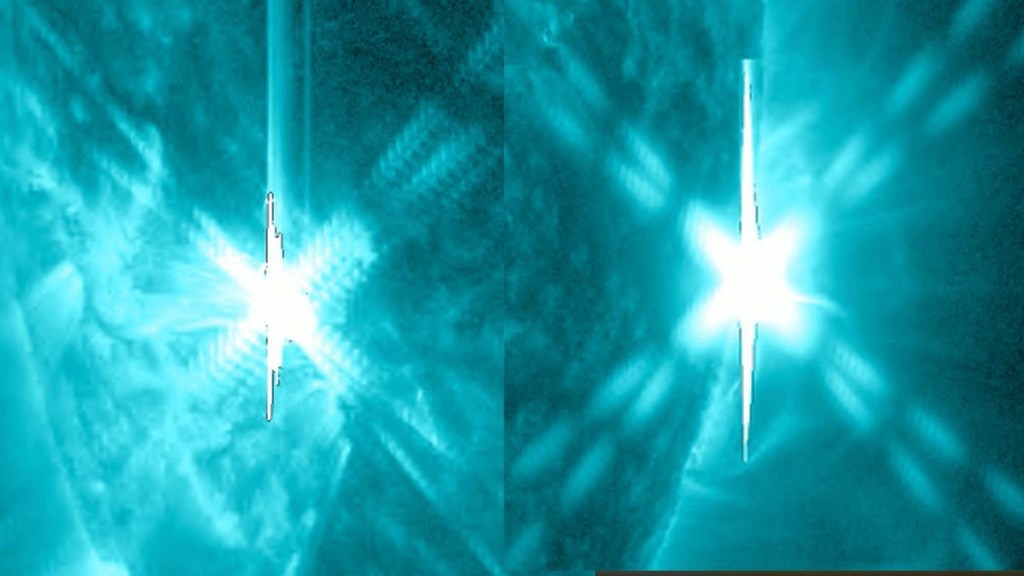
Sunspot AR3767 erupted with a X1.7-class solar flare on Aug. 5, 2024. It was quickly followed by an X1.1-class flare from sunspot AR3780. NASA’s Solar Dynamics Observatory captured the fireworks. (Image credit: NASA/SDO and the AIA, EVE, and HMI science teams, helioviewer.org)
These solar flares can lead to geomagnetic storms, which can disrupt power grids but also enhance auroras, making them more visible at lower latitudes than usual. This increased solar activity is expected to continue throughout the week, with three active sunspots contributing to flare activity.
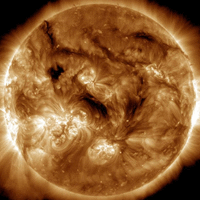
There are no significant coronal holes on the Earthside of the sun. Credit: SDO/AIA
While low-end geomagnetic storms are possible, the strength and direction of future solar storms will determine if Earth will be impacted. Keep an eye on our Facebook page for updates on potential aurora sightings in southern parts of Australia and New Zealand, with the possibility of visibility extending further north. As of 8am local time this morning there is a 20% chance of activity at high latitudes and mid latitudes within the next 24 hours but dropping down to 10-15% over the 24-48 hour time frame.