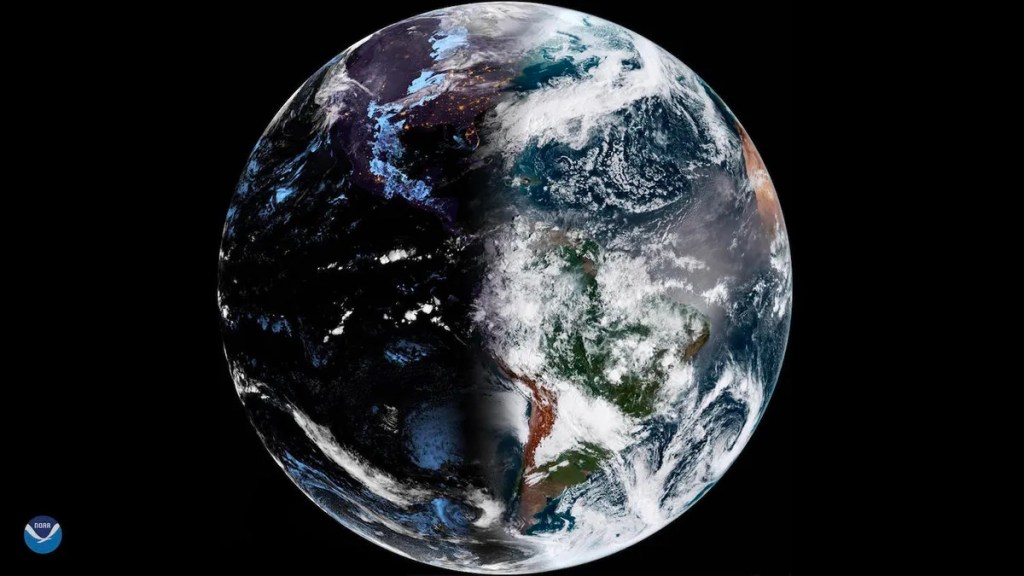

The 2024 Spring Equinox is almost here. The day of Wednesday March 20 marks astronomical spring in the Northern Hemisphere and astronomical autumn in the Southern Hemisphere.
It occurs at precisely 3:06UTC making it 2:06pm AEDT, 1:06pm AEST or March 19 for those is US time zones.
Equinoxes occur twice a year, with night and day being almost the exact same length.
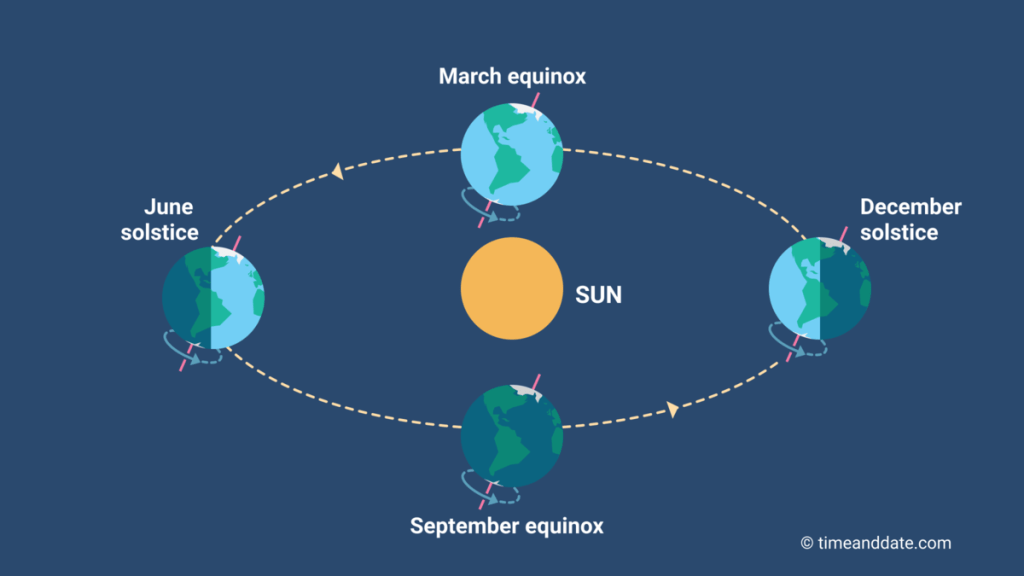
Seasons happen because Earth’s axis is tilted at an angle of about 23.4 degrees and different parts of Earth receive more solar energy than others.
It is a common misconception that seasons occur because of Earth’s elliptical orbit around the Sun, with winter occurring when Earth is farthest away from the Sun, and summer when it is closest to it.
However, our planet’s distance from the Sun has little effect on the onset of seasons. In fact, Earth is closest to the Sun, or at its Perihelion, around the Northern Hemisphere’s winter solstice, while it is farthest away from the Sun, or at its Aphelion, around the north’s summer solstice.
©timeanddate.com
So, when does spring, summer, fall, and winter start and end? It depends on which definition you use and if you are north or south of the equator.
The astronomical definition uses the dates of solstices and equinoxes to mark the beginning and end of the seasons.
In Australia and New Zealand we use the meteorological definition, the seasons begin on the first day of the months that include the equinoxes and solstices.
• spring starts September 1 and ends November 30;
• summer starts December 1 and ends February 28 or like this year February 29.
• autumn starts March 1 and ends May 31; and
• winter starts June 1 and ends August 31.
The forces of light and dark are basically equal at this moment on Earth.