
Uranus and Neptune have plenty of similarities, and like siblings, the two are often compared to each other. But don’t let’s think they are twins just yet.
One thing that set Uranus and Neptune apart is the thickness and opacity of their hazy layers.
A study has found that Uranus’ hazy layer is thicker and more opaque than Neptune’s. This is believed to be due to the higher concentration of aerosols in Uranus’ atmosphere. These aerosols scatter sunlight, causing the planet to appear pale green.
The distance from the Sun also plays a role in the different colors of Uranus and Neptune. Uranus is located about 2.9 billion kilometres away from the Sun, while Neptune is even farther at 4.3 billion kilometres.
The sunlight that reaches Neptune is much weaker than that which reaches Uranus. This weaker sunlight causes the methane in Uranus’ atmosphere to absorb more red light, resulting in a greener appearance while Neptune is bluer.
In addition to the hazy layer and sunlight differences, the composition of the atmospheres of both planets’ contributes to their colours.

Uranus has a higher concentration of methane in its atmosphere compared to Neptune. Methane absorbs red light and reflects blue light, giving Neptune its vibrant cobalt blue colour.
So, the combination of the hazy layer, sunlight differences, and atmospheric composition all work together to give Uranus its pale green hue and Neptune its striking cobalt blue shade.
These findings provide valuable insights into the unique characteristics of these distant ice giants and deepen our understanding of the complex processes occurring in their atmospheres.
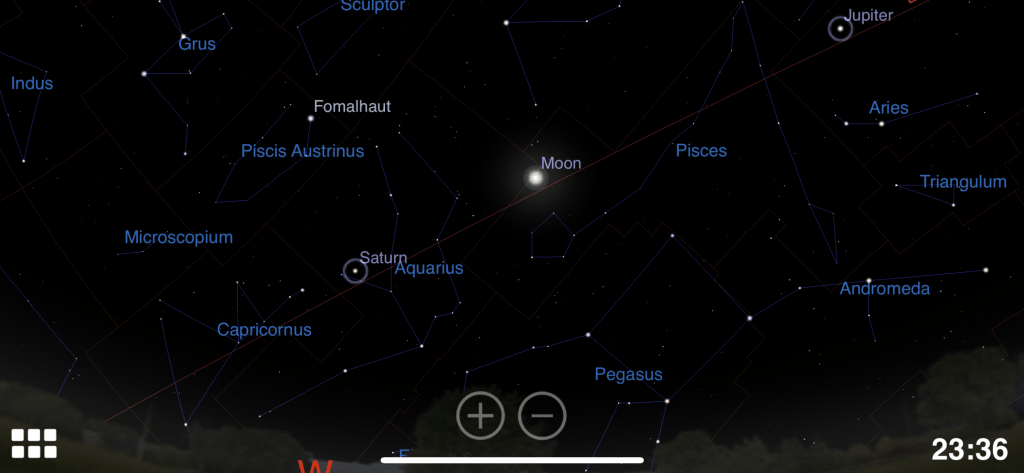
These two distant planets can be seen around midnight with a small telescope in the Eastern sky.